Michel Heller
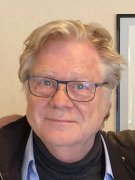 Michel Heller, Doctor in psychology & sport
Psychologist & Psychotherapist, AVP/FSP/EABP
Avenue Virgile-Rossel 18 CH-1012 Lausanne
from Monday to Wednesday, 3 weeks per month except holidays
TEL. +41 (0)21 683 17 47
Languages spoken: English & French
To join me, please click on Contact-Form or leave a message on the telephone.
Important: I will retire in spring 2024. I therefore only see new patients for a short-term process.
I use psychological methods which focus on how verbal and nonverbal dynamics shape a person's inner dynamics and communication style:
- Integrative body Psychotherapy
- Supervision for individuals and teams
- Individual courses and coaching of body-mind autoregulation techniques (movement, breathing and relaxation)
- Expertise in nonverbal communication
Professional affiliations :
- Swiss Psychological Association (FSP)
- Psychological Association of Vaud (AVP)
- European Association of Body Psychotherapy (EABP).
News
-
For a new psychosomatic: what breaths between head and legsPsychotherapy of an organism (presentation & workshop) Symposium of the Le Noirmont ... more info
-
Michel Heller is interviewed by Helen Payne on body psychotherapy and researchOn a life trying to understand individuals as an organismic system, in which psychological, ... more info
-
Michel Heller (2022). L’organisme intime. Approches psycho-corporelles des troubles fonctionnels. Paris : L’Harmattan.The Intimate Organism is an analysis of the use of mind-body approaches to treat patients who ... more info
Quotes
-
Pierre Janet:«More generally, can we precisely separate physiological functions and psychological functions? Neuropathic disorders [...] are the expression of the activity of the entire organism, of its growth, its evolution, its involution. [...] Psychology is not independent of physiology, but it requires a more delicate, deeper physiology than that of digestion or respiration. The study of nervous and mental illnesses, far from being able to do without physiological and medical knowledge, will increasingly require much more in-depth physiology and medicine.” » (Pierre Janet, 1923, La médecine psychologique, III.II.2, p. 151)
-
Lamarck: Biological flexibility«Le point essentiel à considérer est que, dans tout système d’organisation animale, la nature ne peut avoir qu’un seul moyen à sa disposition, pour faire exécuter aux différents organes les fonctions qui leur sont propres.» (Jean-Baptiste de Lamarck, 1809, Philosophie Zoologique, III, Introduction, p. 464) NB The english translation does not accept this point of view.
-
The soul according to Descartes« Art. 30. The soul is in a very real sense joined to the whole of body, and that it cannot stritctly speeking be said to be in one of its parts to the exclusion of the rest, first because the body is a unity and in a sens indivisible, on account of the disposition of its organs, which are so closely connected with one an other that, when one of them is removed, the whole body is rendered defective; and secondly, because the soul is of a nature that has no relation to extension ot to the dimensions or other properties of the matter of which the body is constituted, but relates only to the total combintation of the body's organs.» (René Descartes, 1649, The Passions of the Soul, p. 207, translation by Michael Moriatry)
-
"Good sense is the most evenly shared thing in the world,""for each of us thinks he is so well endowed with it that even those who are the hardest to please in all other respects are not in the habit of wanting more than they have." (Descartes, Discourse on the Method of Properly Conducting One's Reason and of Seeking the Truth in the Sciences I. Translator: F. E. Sutcliffe)
-
As man thrived in different regions of the globe, he increased in number, established in society with fellow creatures,"and finally progressed and became civilized, his delights, his needs, increased and became more and more diversified ; he developed increasingly varied ways of relating to the society he lived in, which, among other things, generated increasingly complex his personal interests. His inclinations subdivided endlessly, generated new needs that activate themselves beyond the scope of his awareness. These grew into a huge mass of links that control nearly every part of him, without him being able to perceive it." (Lamarck, Lamarck, Histoire Naturelle des Animaux sans Vertèbres , vol. 1, 1815 : 278). Translated by Marcel Duclos and Michael Heller
Books of Michel Heller
-

Body Psychotherapy
history, concepts & methods
New York: W.W. Norton, 2012
more info + order -
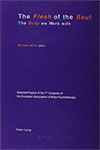
Flesh of the Soul
The body we work with
Bern: Peter Lang, 2001
more info + order -

Psychothérapies corporelles
Fondements et pratiques
Louvain: DeBoeck, 2008
more info + order -

Körperpsychotherapie
Geschichte - Konzepte - Methoden
Erschienen im Oktober 2017
more info + order -

La Méduse
ou le monde reichien de Gerda Boyesen
Les Editions Biodynamiques
more info order -

L'organisme intime
Approches psychocorporelles des troubles fonctionnels
more info + order
Michel Heller, Docteur in psychology & sport
Psychologist & Psychotherapist AVP/FSP/EABP
Avenue Virgile-Rossel 18
1012 Lausanne
021 683 17 47
Languages spoken : English & French
IMPORTANT: For an appointment, please telephone.
painted by Joanna Raphael